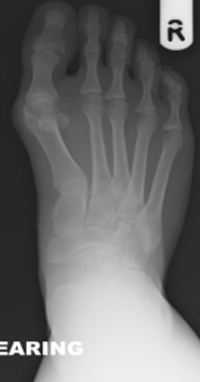
The medical term for this is hallux valgus. Hallux means big toe and valgus means that the toe deviates to the outside of the foot. The term Bunion really just means a bump. It is derived from the Latin word bunio, which means turnip! As the toe becomes deformed as well as causing a cosmetic deformity it affects the function of the foot.
The foot tends to become more flat and you can get pain under the forefoot area and over the bony prominence on the inside of the foot from rubbing on footwear. As the deformity progresses the big toe can act as a bully pushing the other toes out of the way. It is usually the 2nd and 3rd toes that are affected. This can result in a dislocation of the other toes or can cause the toes to claw as they try to get out of the way. This can then cause problems with footwear as the toes rub on the shoes and corns develop on the tops of the toes.
Because there are many factors involved with the cause of a bunion there is no one single treatment for bunions. There are over 100 different operative procedures described in the medical literature to deal with bunions.
1, Change the shape of your footwear or adapting it to minimise your symptoms.
2, Change the shape of your foot by surgery.
Looking at the footwear there are many options. These include wider shoes (Wide toe box), softer leather shoes, sandals in the summer months, and custom made bespoke shoes with extra depth and width. There are also various silicone spacers and supports available that can be used to take the pressure off the bunion and help to prevent rubbing on any footwear.
If you have a flat foot then an insole with an arch support may also help reduce some of the symptoms.
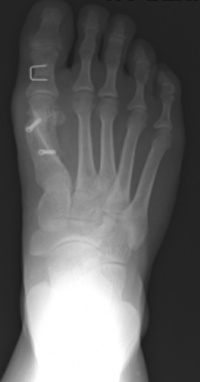
The goals of surgery are to realign and balance the big toe so that it and the foot functions more normally. This is usually done by a combination of tendon and ligament releases and by making cuts in the bones (osteotomy) and fixing the bones in a slightly different position. The bone cuts are usually fixed with screws or a staple and this is stable which allows for early mobilisation and weight bearing without the need for plaster in most cases. Sometimes however if the bunion deformity is more severe then the deformity has to be corrected by permanently fusing a joint (arthrodesis) and this will usually need protecting in a plaster cast (POT).